
BarCamp Kathmandu 2026
August 15, 2026 IIMS College, Naxal

Show up.
Speak up.

Talk, listen, argue, or just follow your curiosity. All you have to do is turn up and join the ride.

An unconference is a gathering for attendees, by attendees. A few talks open the day. After that there is no schedule, not until the sessions go up on one big physical timetable and the room decides where to be.
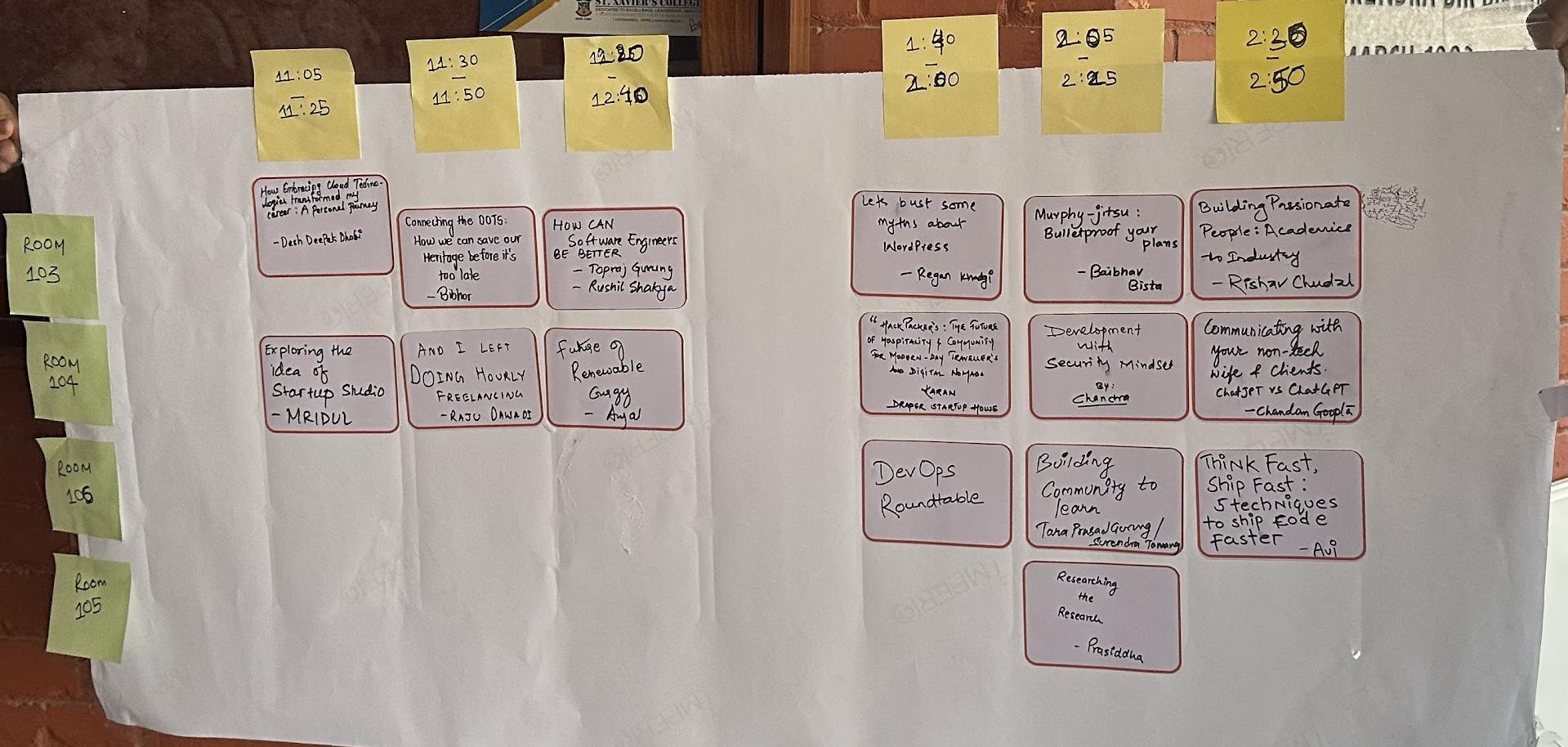
The session board at BarCamp Kathmandu 2024: a wall-sized grid of tracks and time slots, filled in by hand with session cards.
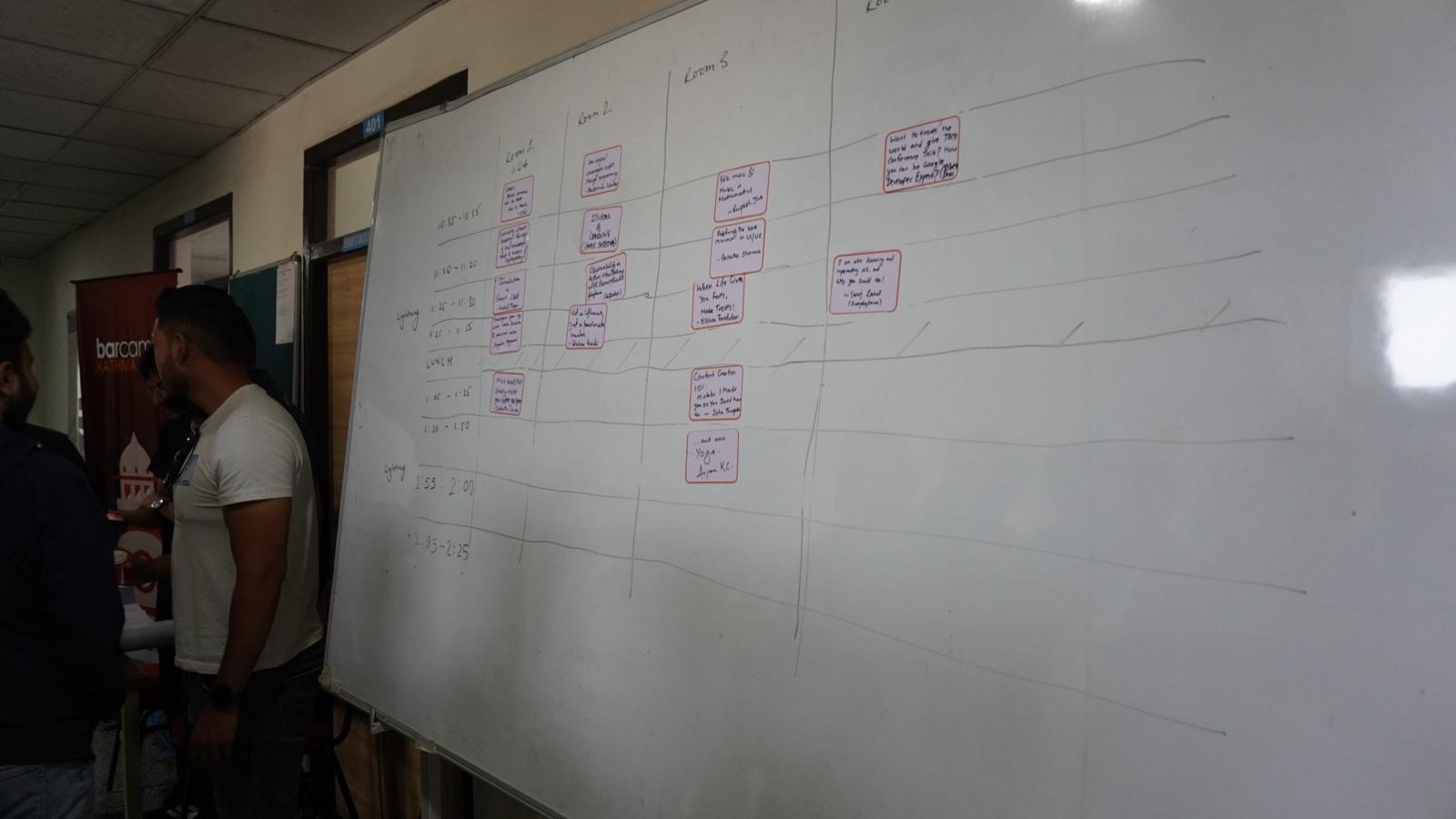
The 2025 session board: a whiteboard grid of rooms and time slots covered in handwritten session cards, with attendees reading it.
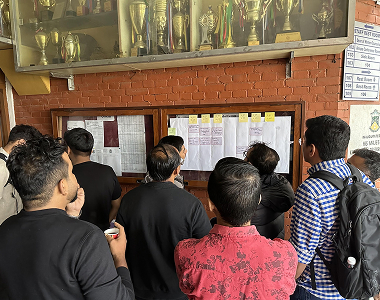
Attendees crowded around the printed session grid, reading the day’s tracks.
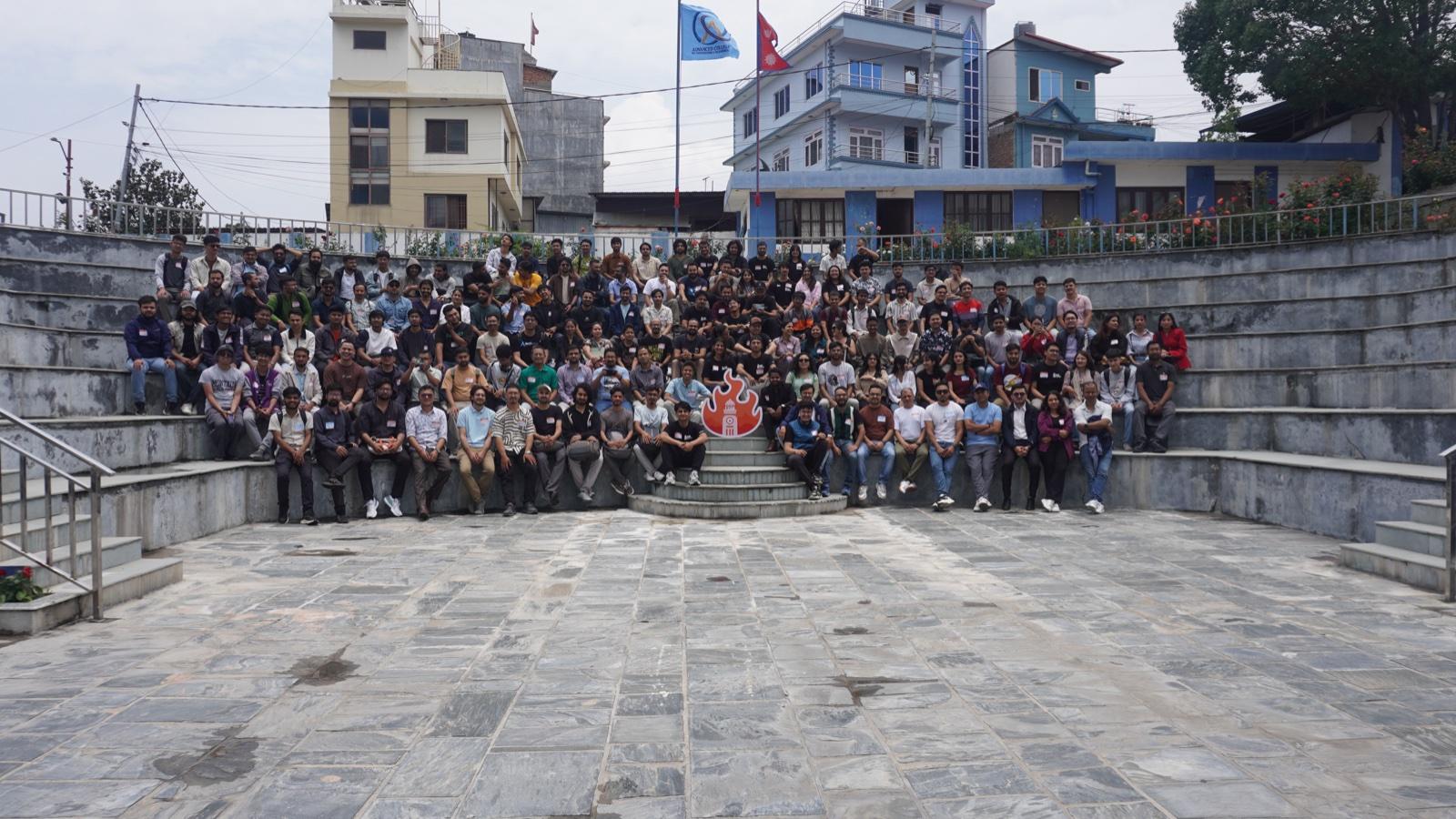
The BarCamp Kathmandu 2025 group photo: around a hundred and fifty attendees filling the tiers of an outdoor amphitheatre.
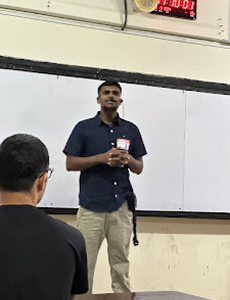
A speaker presenting at a whiteboard to a seated room.
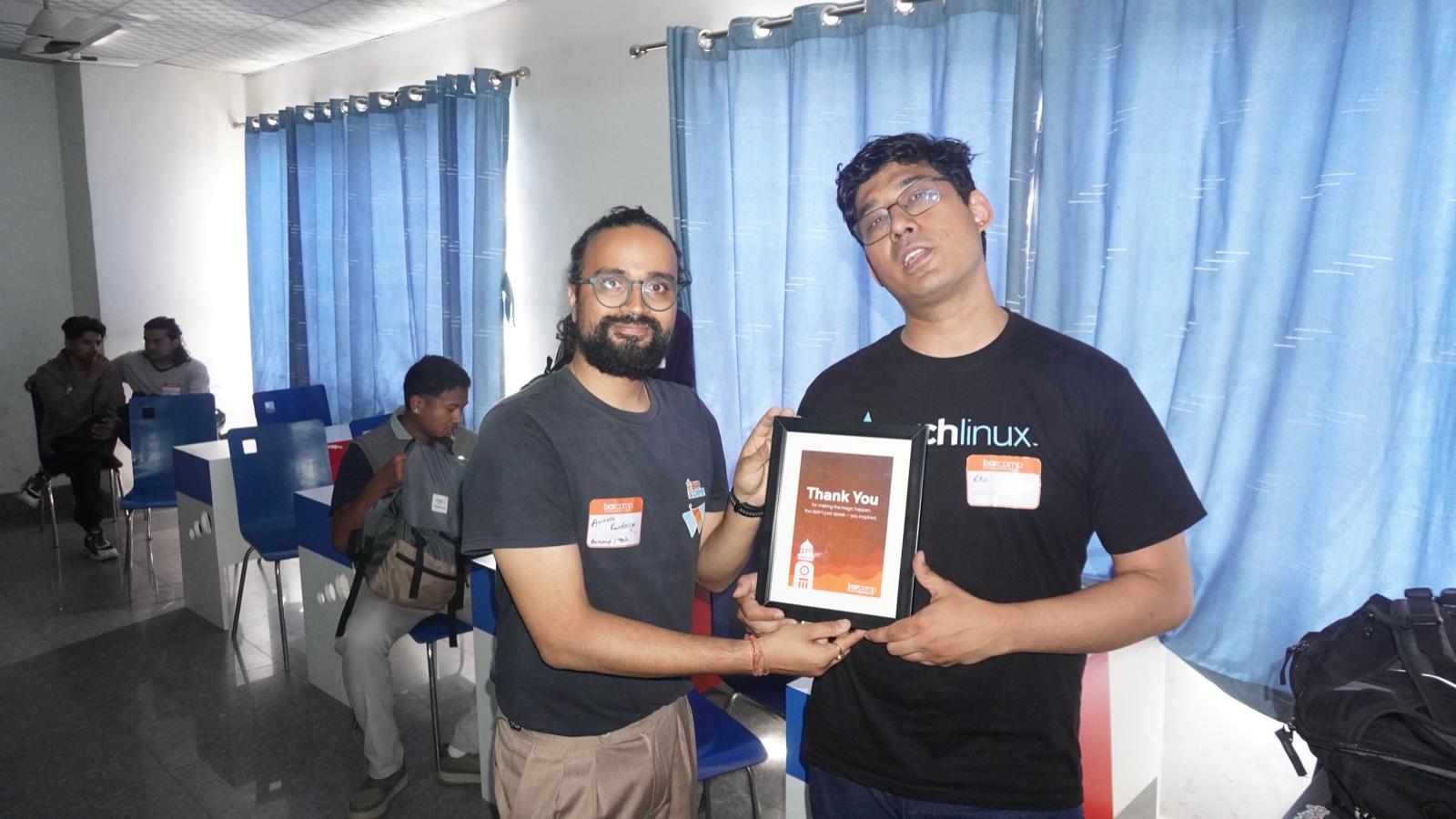
A speaker being handed a framed BarCamp thank-you certificate in one of the session rooms.
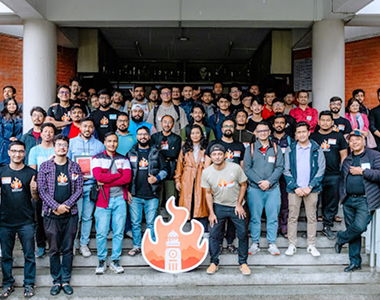
The BarCamp Kathmandu group photo on the steps outside the venue.
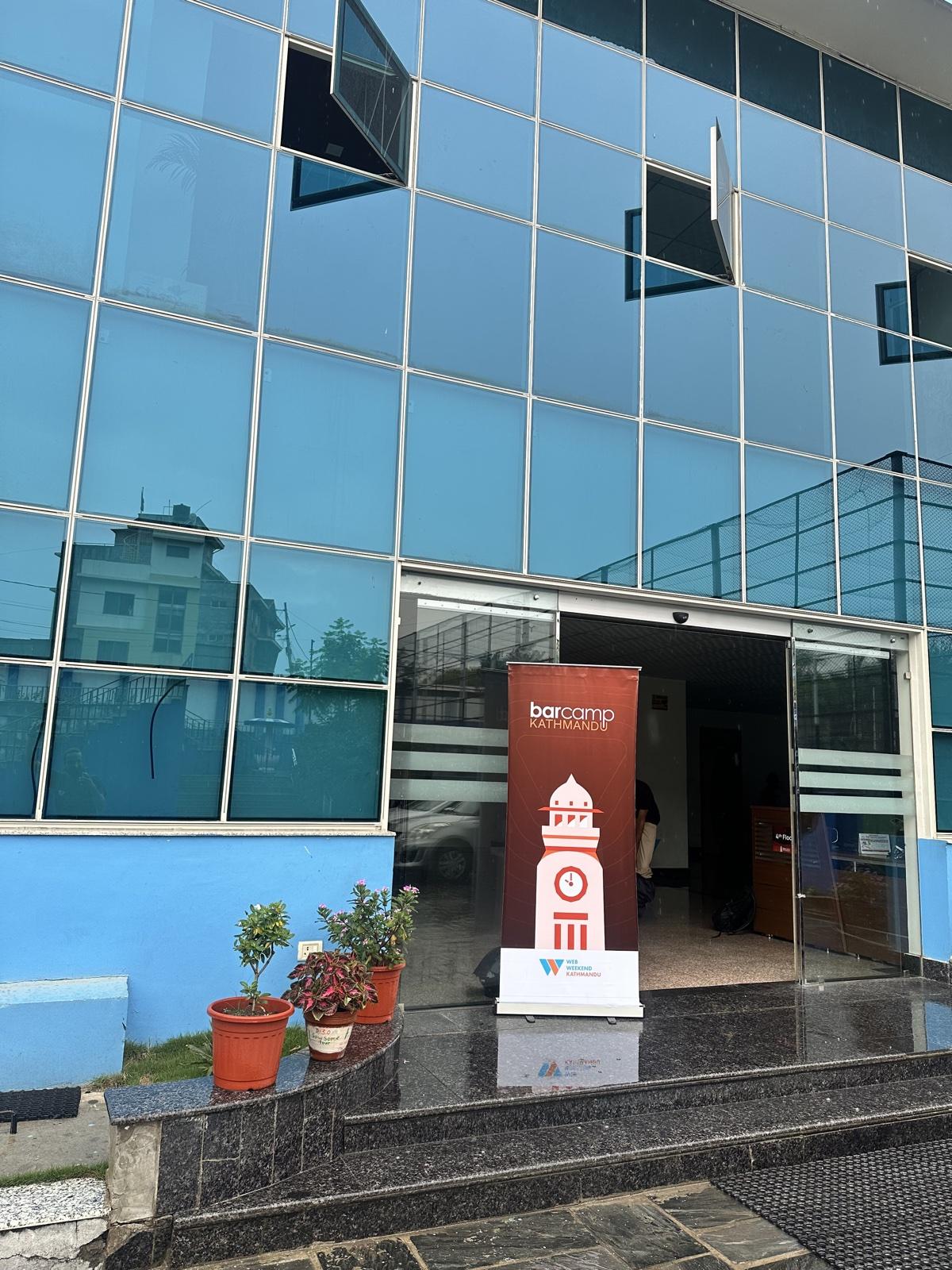
The venue entrance in 2025, with a BarCamp Kathmandu roll-up banner beside the doors.
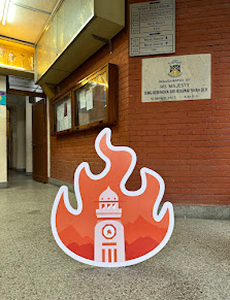
The BarCamp flame logo standee at the venue entrance.
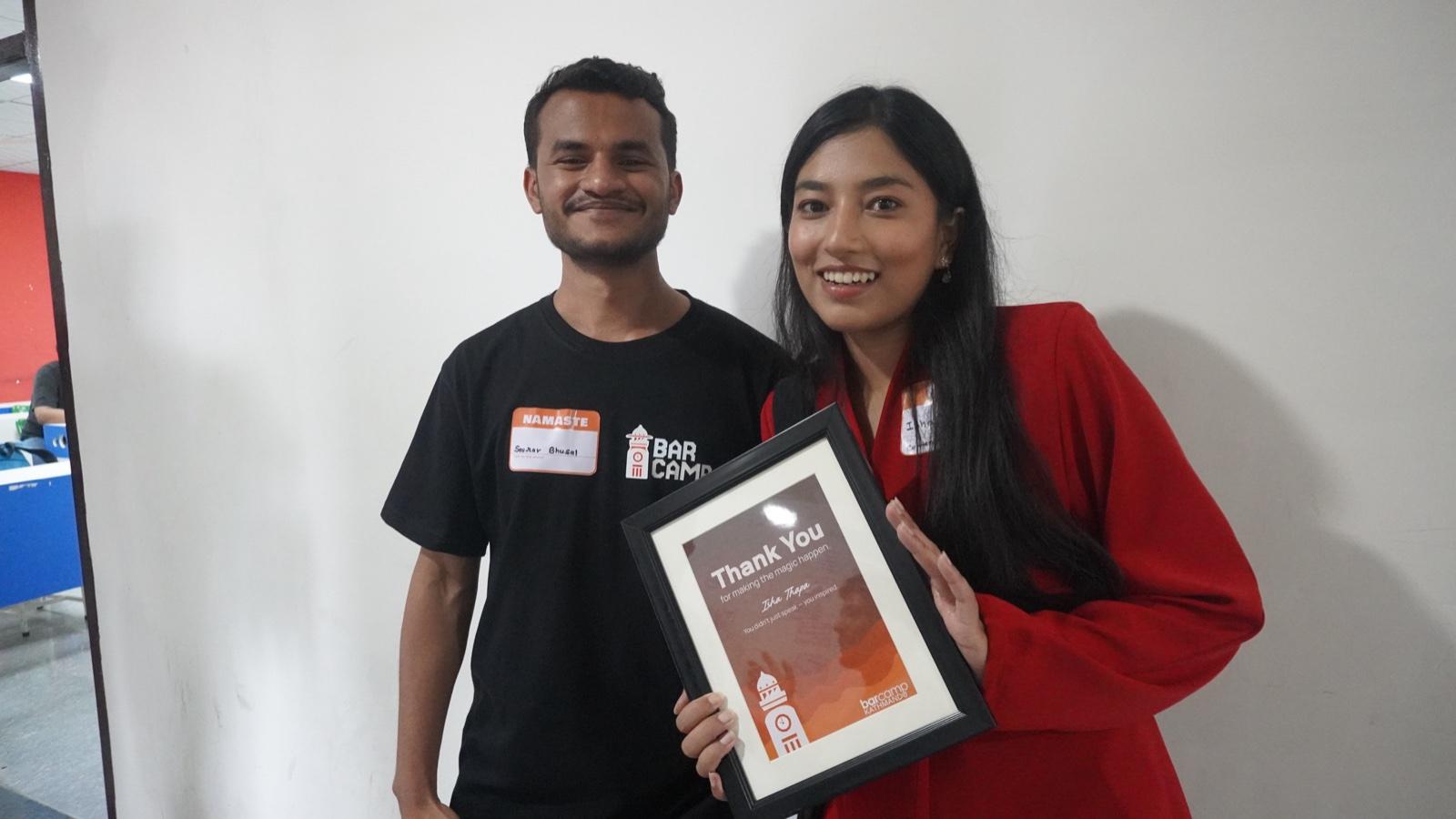
Two organisers holding up a framed BarCamp thank-you certificate for the camera.
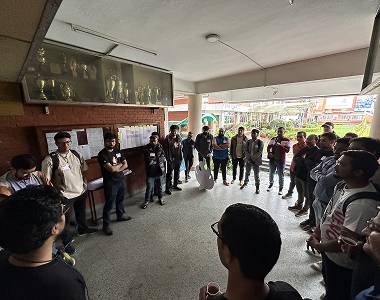
Attendees gathered in the open corridor as someone addresses the group.
Two years of BarCamp Kathmandu, and everyone who showed up for it.

Talk about anything

Not just tech. Bring your unique take on fitness and art, a rabbit-hole you fell down, or that use-case for AI you discovered.

Information Technology Music Design Arts Philosophy Life and Lifestyle AI Blockchain Futuristic Nostalgia Standup Comedy Deep Dive Education and Training Health and Fitness Other
Pre-commit to it

You've got something to share.

Studies say you're far likelier to give that talk if you commit in advance. Consider this your nudge.

Submit a proposal

Who's talking so far

These ones are confirmed. Nothing else is, so if you've been putting off that pitch, now's a good time.

Education and Training

How I Built My Digital Classroom: A Custom LMS Alternative

Most classrooms still rely on PowerPoint files on USB drives, printed notes, and manual attendance. Over the past few years, I have gradually built my own teaching ecosystem for my business and IT classes that helps me teach more efficiently while making learning resources instantly accessible to my students. In this session, I will demonstrate the tools I use in every class, including a custom random student picker, live-hosted lecture slides, downloadable notes, and a dedicated mobile app that puts course materials right in my students' pockets. I will share why I chose to build my own system instead of relying on a traditional Learning Management System, what worked, what didn't, and how anyone can start building their own digital teaching workflow. They get to experience how it feels to be in a class of a Digital Marketing Expert in Nepal.

  • EdTech
  • Web Development
  • Mobile Apps
AK
Arjan KC

Full session

Design

Why does the human brain reject better products? Decoding the UX of resistance.

Why do people keep using things they don't even like, instead of switching to something better? This session breaks down the Four Forces of Progress — Push, Pull, Anxiety, and Habit — the real reasons behind why we switch products, or why we don't. Using real, relatable examples (like my own switch from ChatGPT to Claude), we'll look at why the brain resists change, and what that means if you're building something people are supposed to switch to.

  • UX Design
  • Product Design
  • Behavioral Psychology
AS
Ashika Sharma

Full session

AI

Everyone's an AI Builder.Nobody's a Seller.

AI Can Build Anything — Except a Customer. For most of us the journey is Prompt → Product → …Nobody. Everyone here can now ship a product in a weekend — AI made building basically free, and that's exactly the problem. In 5 fast, funny minutes, I'll walk through the data: just how many people are now building with AI, how many of them aren't even developers, and how fast new apps are flooding in. Then the graveyard — the huge share of apps almost nobody ever downloads, and the real #1 reason startups die (hint: it isn't running out of money). We'll roast some famous, expensive flops: billion-dollar apps that died in months, gadgets beaten by a bare hand, even big tech quietly killing its own AI tools. Then the winners — who succeed for ONE reason: distribution. The real takeaway: in the AI era the product is a commodity and the scarce skill is selling — starting with selling yourself. You'll leave with one question worth more than any product: not "can I build it?" but "who will buy it, and why would they buy it from YOU?"

  • Startup
  • AI
  • Product
UP
Upendra Prasad Neupane

Lightning talk

AI

AI Died Twice; And Came Back Stronger Each Time

AI has faced two freezing "winters" and nearly "died" twice in 70 years. Both times, it came back stronger. This jargon-free talk walks through AI's biggest failures and comebacks, from rigid rule-based systems to today's ChatGPT. We will also look at what wall it might hit next.

  • history
  • evolution
  • ai
RR

Rupak Raj Ghimire

Full session

Information Technology

your code is horrible pls lint it

This presentation addresses the critical role of static code analysis, specifically utilizing ESLint, in mitigating human error and maintaining architectural integrity in software development. The text explores how automated linting tools optimize code quality by enforcing strict syntactic structures. Key methodologies examined include the implementation of "Yoda conditions" to prevent accidental variable assignments at compile time, and the mandate of trailing commas to ensure isolated, clean diffs within version control systems. Furthermore, the author outlines programmatic constraints regarding maximum nesting depth, line limits, and file lengths to preserve readability and systematically reduce technical debt. While demonstrating flexible configuration methods through global, file-level, and inline overrides, the paper ultimately concludes that automated linting establishes structural consistency, whereas logical efficacy remains the responsibility of the engineer.

  • linter
  • eslint
  • biome
R
Rohit

Full session

Content creation

Endless business opportunity using social media

I was a part of a 3D printing business “Lakhey tech” in which I was assigned to the role of 3D designer and Content Creator. Almost all of our clients were our online viewer and we hit 2Lakhs plus sales within initial 2 months. I wanna share that experience.

  • Content creation
  • 3D printing
  • business
SB
saurav bhusal

Full session

Information Technology

A Recent High School Grad’s Guide to Self-Taught Dev: Skip Tutorials, Build Stuff

A practical discussion on breaking free from tutorial hell. From a recent high school graduate's perspective, this session explores how to shift from passive video watching to hands-on project building, overcome imposter syndrome, and navigate self-directed learning in tech.

  • self-taught
  • career
  • programming
SP
Samrat Parajuli

Full session

Entrepreneurship / Startups

A Day in the Life of an Entrepreneur: Decisions, Priorities & Surviving the Chaos

Everyone sees the successful product launches, funding announcements, and social media wins. Very few see the dozens of decisions entrepreneurs make every single day. In this session, we'll walk through a realistic day in the life of an entrepreneur; from morning planning and financial decisions to project evaluation, leadership, time management, handling uncertainty, and ending the day with reflection. Rather than theory, this talk focuses on practical systems that anyone can apply whether they're building a startup, freelancing, or leading a team.

  • Startups
  • Decision Making
  • Project Management
EA
Er. Aashutosh Jha

Full session

Frequently asked questions

What is BarCamp Kathmandu?

BarCamp Kathmandu is an unconference: a participant-driven event where anyone can share, learn, and connect in an open and informal setting. Unlike traditional conferences with a fixed programme, BarCamp is built around sessions proposed by attendees themselves.

Whether you’re a developer, designer, entrepreneur, student, or simply curious, BarCamp is a space where ideas flow freely, and everyone is encouraged to contribute.

The only rule? If you attend, try to present something. Even a question or a story can spark a great discussion.

Wait, what is an unconference?

An unconference is a gathering for attendees by the attendees. This means you decide what to talk about and what talks to listen to. You are the attendee, you are the speaker.

Beyond the few talks that open the day, there is no fixed schedule until the event itself. The sessions cover a variety of topics, and the day is created collaboratively, built by you and the other attendees who have a topic, story, knowledge, or experience to share with the rest of the community.

Who should attend BarCamp Kathmandu?

Everyone. Session categories range from technology, music, arts, lifestyle, fitness, to design, arts, philosophy. So, yeah, we do really mean everyone can attend.

How can I stay updated on the event details?

Follow us on LinkedIn, Instagram, Facebook, X and YouTube to keep up with our announcements.

Can I present at the BarCamp? What topics can I cover?

Yes you can!

Giving a session is a perfect opportunity to speak about that cool topic you are interested in: whether it be about your unique take on Fitness and Art, about that cool use case for AI you discovered, or about the rabbit hole you went down last year about Nepali traditional Dhunge dharas.

How are topics chosen?

Most session topics are scheduled the morning of the event and are provided by the attendees.

Speakers can also submit proposals before the day of the event, and attendees can upvote to indicate their interest in the talk.

The idea, however, is that there will be large amounts of open space in the calendar on the morning of the event, and if someone wants to give a talk on the day, they will have space and time to do so.

If you’re at the conference and there is no session that interests you, recognise that this is your conference! So please go ahead and hold an impromptu session in the open spaces at the venue.

Does BarCamp have something to do with bars and alcohol?

No, it doesn’t. It’s actually a hacker reference to FooBar, which is typically used as a placeholder name when describing something in software code. BarCamp arose as an open-to-the-public alternative to Foo Camp, which is an invitation-only conference.

Who is organizing this?

Well, this is an unconference, so all attendees (yes, YOU!) will play an important role in organizing it, selecting talks, etc. But the logistics will be managed by the team behind Web Weekend Kathmandu.